


Introduction
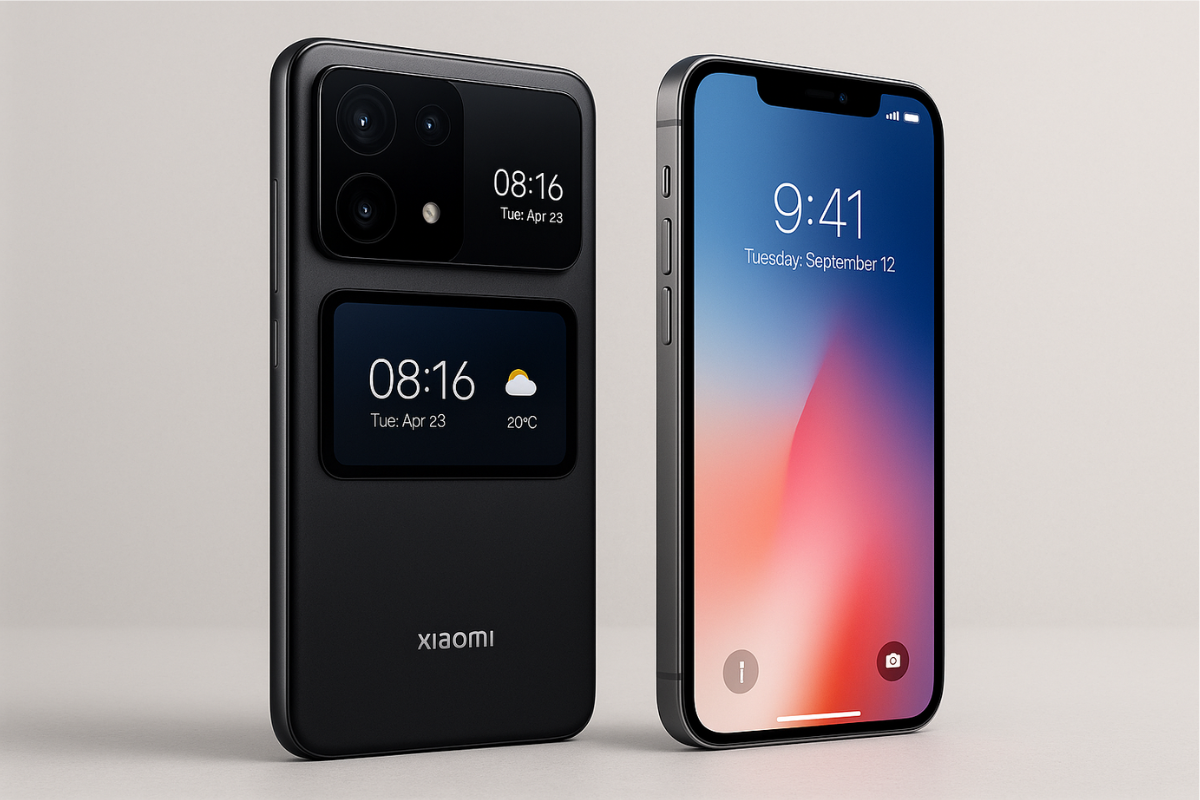
The smartphone industry never stands still. Every few months, a new device pushes the boundaries of innovation, performance, and design. While Apple’s iPhone redesigns often dominate the headlines, Xiaomi has once again proven why it deserves a seat at the table of tech giants. With its latest smartphone release, Xiaomi has gone beyond incremental updates — introducing a dual-screen feature that completely redefines user experience and mobile functionality.
In this in-depth blog, we’ll explore how Xiaomi’s newest smartphone is outsmarting Apple’s latest iPhone, what makes its dual-screen technology so revolutionary, and what this means for the future of smartphone design.
Basic Information Table
| Feature/Category | Details |
|---|---|
| Brand | Xiaomi |
| Model | Xiaomi DualView Pro (expected name) |
| Launch Year | 2025 |
| Primary Display | 6.9-inch AMOLED 2K+ Display (120Hz refresh rate) |
| Secondary Display | 3.1-inch AMOLED Rear Display |
| Processor | Qualcomm Snapdragon 8 Gen 4 |
| RAM & Storage Options | 12GB/16GB RAM with 256GB/512GB/1TB storage |
| Operating System | MIUI 16 (based on Android 15) |
| Main Camera Setup | 200MP + 50MP Ultra-Wide + 50MP Telephoto |
| Front Camera | 50MP under-display camera |
| Battery | 6,000mAh with 120W wired and 50W wireless charging |
| Build Material | Aerospace-grade Aluminum Frame with Gorilla Glass Victus 3 |
| Connectivity | 5G, Wi-Fi 7, Bluetooth 5.4, NFC |
| Special Feature | Dual-screen mode with AI adaptive display switching |
| Price Range (Expected) | $999 – $1,299 |
| Availability | Global launch expected Q4 2025 |
A Bold Step Beyond Apple’s Redesign
Apple’s recent iPhone redesign introduced a sleeker form factor, thinner bezels, and upgraded camera modules. But Xiaomi’s latest innovation goes beyond aesthetics — it introduces functionality with purpose. The secondary rear display isn’t just a gimmick; it changes how users interact with their devices.
Imagine taking selfies with the main camera while seeing yourself on the rear display, or checking notifications, widgets, and time without turning your phone around. This feature saves battery life, reduces unnecessary screen-on time, and provides a futuristic touch to smartphone interaction.
Design Language: Futuristic Yet Functional
Xiaomi has always balanced bold design with practicality. The new dual-screen device retains a premium aesthetic with a matte aluminum frame and curved glass panels. Despite housing two screens, the phone maintains a surprisingly slim profile — around 8.7mm thick — and feels balanced in hand.
The rear display seamlessly integrates into the camera module, creating a unified design that’s both visually striking and ergonomically smart. Unlike many foldable phones, Xiaomi’s dual-screen concept avoids hinges or folding mechanisms, ensuring durability and simplicity.
How the Dual-Screen Feature Works
The secondary display on the back isn’t just a smaller copy of the main screen — it’s powered by Xiaomi’s custom AI Display Engine, allowing it to serve specific purposes such as:
-
Quick View Mode: Display notifications, weather, time, and battery without waking the main screen.
-
Camera Viewfinder: Use the rear display to take perfect selfies or vlogs using the superior main camera.
-
Always-On Personalization: Show animations, signatures, or widgets when the phone is idle.
-
Smart App Mirror: Mirror selective apps (e.g., music, camera, or messaging) to manage tasks from either side.
This intelligent secondary display transforms the phone from a simple communication device into a dual-function productivity tool.
Performance: Power Meets Precision
At its core, Xiaomi’s latest smartphone is a performance beast. Powered by the Snapdragon 8 Gen 4 chip, it delivers lightning-fast processing, efficient AI computation, and advanced graphics capabilities. Coupled with up to 16GB of LPDDR5X RAM, this device is ready for everything from gaming marathons to 8K video editing.
The inclusion of UFS 4.0 storage ensures blazing-fast app loading and data transfers. Xiaomi also integrates advanced cooling technology to prevent overheating during prolonged high-performance tasks.
Camera Capabilities: Professional Photography in Your Pocket
Photography has always been a strong point for Xiaomi, but this model takes it to another level. The 200MP primary sensor captures extraordinary detail, while the 50MP ultra-wide and 50MP telephoto lenses ensure versatility.
With the rear display acting as a live viewfinder, users can take high-quality selfies using the main sensor — a feature that completely overshadows most front-facing cameras on today’s smartphones.
Other camera innovations include:
-
AI Scene Optimization 2.0 for real-time lighting adjustments.
-
4K/8K video support with cinematic stabilization.
-
Low-light enhancement via pixel-binning and adaptive night mode.
-
Dual-screen preview for subjects to see themselves while being photographed.
Battery and Charging: Built for Power Users
Xiaomi’s latest device comes with a 6,000mAh battery, ensuring long-lasting performance even with two displays. The company’s 120W HyperCharge technology can recharge the phone from 0 to 100% in under 20 minutes, while 50W wireless charging offers flexibility.
In comparison, Apple’s latest iPhone still relies on slower charging speeds and smaller batteries — a reminder that Xiaomi remains ahead in raw hardware efficiency.
Software Experience: MIUI 16 + Android 15
The software experience is just as refined as the hardware. MIUI 16 introduces AI-driven customization, smarter notification management, and seamless integration with the dual-screen system.
The “Smart Mirror Mode” dynamically syncs data between the two screens, while the Adaptive Display AI automatically decides which screen to use based on user behavior — conserving power and improving usability.
Comparison: Xiaomi vs. Apple iPhone Redesign
| Aspect | Xiaomi Dual-Screen Pro | Apple iPhone (Latest Redesign) |
|---|---|---|
| Design | Dual-screen innovation | Single-screen minimalist design |
| Camera | 200MP triple-lens + rear viewfinder | 48MP dual/triple-lens |
| Performance | Snapdragon 8 Gen 4 | Apple A18 Pro |
| Display | Dual AMOLED (120Hz) | Single Super Retina XDR |
| Charging | 120W wired, 50W wireless | 30W wired, 20W MagSafe |
| Battery | 6,000mAh | 4,000mAh (approx.) |
| Software | MIUI 16 (Android 15) | iOS 18 |
| Price | $999–$1,299 | $1,099–$1,599 |
| Innovation Edge | Dual-screen, AI integration | Design and ecosystem refinement |
Xiaomi’s phone clearly wins on versatility and innovation, while Apple maintains its strength in ecosystem integration.
User Experience: Designed for Modern Lifestyles
The dual-screen design caters perfectly to multitaskers, content creators, and professionals. Imagine replying to a message on the rear screen while streaming on the front, or checking your schedule without flipping your phone.
Content creators can shoot cinematic videos using the main camera while previewing framing in real time — a feature that can easily replace entry-level vlogging cameras.
Why Xiaomi’s Innovation Matters
This launch isn’t just about outdoing Apple — it’s about redefining what’s possible in smartphone design. Xiaomi’s approach highlights a few key takeaways:
-
Innovation Over Imitation: Instead of following trends, Xiaomi is setting them.
-
User-Centric Features: The second screen solves real-world problems.
-
Affordable Flagship Value: Despite high-end specs, it remains competitively priced.
Such innovation shows the evolution of the smartphone market: a shift from incremental updates to transformative, user-oriented design.
Future Possibilities: Beyond Dual Screens
The dual-screen innovation could be just the beginning. Industry analysts speculate Xiaomi may expand this technology to tablets, wearables, and even laptops. Integrating AI-driven display adaptation could make devices smarter, more energy-efficient, and context-aware.
If successful, this could inspire other manufacturers — including Apple — to rethink how users interact with their devices.
Conclusion
Xiaomi’s latest smartphone isn’t just another flagship — it’s a statement of innovation. By combining premium hardware, cutting-edge design, and intelligent software, Xiaomi has managed to outsmart Apple’s much-hyped redesign.
The dual-screen concept opens a new chapter in mobile technology — one where convenience, creativity, and connectivity merge seamlessly. For tech enthusiasts and professionals alike, this smartphone isn’t just a device; it’s the future of how we interact with technology.
